

George Foreman Net Worth is estimated at around $300 million, built from his legendary boxing career and massive business success. While he earned millions from championship fights, most of his wealth came from the George Foreman Grill, endorsements, investments, and smart brand deals after retiring from boxing.
George Foreman is living proof that sometimes your greatest success comes after you think your career is over. The two-time heavyweight boxing champion and Olympic gold medalist transformed from a fearsome fighter into one of the wealthiest athletes in history. But here’s the shocking truth:
George Foreman made more money from a kitchen appliance than he ever did from boxing. With a net worth of $300 million in 2026, Big George’s story is about reinvention, resilience, and recognizing opportunity when it knocks. Let’s explore how this former heavyweight champion built an empire that goes far beyond the boxing ring.
Table of Contents
Biography Table
| Category | Details |
|---|---|
| Full Name | George Edward Foreman |
| Date of Birth | January 10, 1949 |
| Age | 77 years old (as of February 2026) |
| Birthplace | Marshall, Texas, USA |
| Net Worth (2026) | $300 Million |
| Height | 6 ft 3 in (1.91 m) |
| Weight (Fighting) | 220-250 lbs |
| Profession | Former Professional Boxer, Entrepreneur, Minister, Author, TV Personality |
| Famous For | Two-time Heavyweight Champion, George Foreman Grill, Oldest Heavyweight Champion |
| Spouse | Mary Joan Martelly (married 1985) |
| Children | 12 (5 sons all named George, 7 daughters) |
| Nationality | American |
| Boxing Record | 76 Wins (68 by knockout), 5 Losses |
| Major Achievement | Olympic Gold Medal (1968), Heavyweight Champion (1973-1974, 1994-1995) |
| Business Ventures | George Foreman Grill, Endorsements, Book Sales |
Who Is George Foreman?
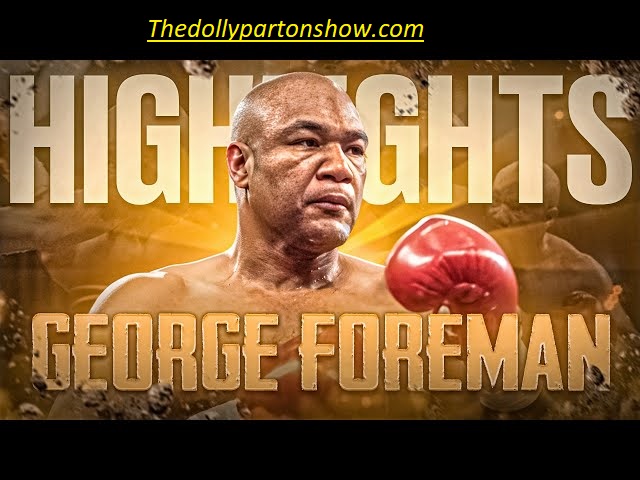
George Foreman is a former professional boxer, ordained minister, entrepreneur, and one of the most successful athlete-businessmen in history. He’s a two-time world heavyweight boxing champion and Olympic gold medalist who became even more famous for his business ventures after retiring from the sport.
What makes George Foreman unique in the world of sports is his incredible comeback story—not once, but twice. First, he returned to boxing after a 10-year retirement to become the oldest heavyweight champion in history at age 45. Second, he transformed himself from a feared fighter into a beloved pitchman, earning hundreds of millions from the George Foreman Grill.
Foreman’s boxing career was legendary. He won an Olympic gold medal in 1968, became heavyweight champion by defeating Joe Frazier in 1973, and participated in one of boxing’s most famous fights—”The Rumble in the Jungle” against Muhammad Ali in 1974. After losing to Ali, Foreman retired, became an ordained minister, then made an improbable comeback that shocked the sports world.
Early Life & Background
Childhood in Poverty
George Edward Foreman was born on January 10, 1949, in Marshall, Texas, a small town in the eastern part of the state. His early years were marked by extreme poverty and hardship that would shape his character and drive for success.
Family Struggles:
George grew up in the Fifth Ward of Houston, Texas, one of the city’s poorest and most dangerous neighborhoods. His family circumstances were difficult:
- His mother, Nancy Foreman, worked multiple jobs to support the family
- George believed J.D. Foreman was his father, but later discovered his biological father was Leroy Moorehead
- The family lived in a small house without indoor plumbing
- They often went without adequate food or clothing
- Seven children shared cramped living quarters
Troubled Youth
As a teenager, George was heading down a dangerous path:
The Angry Years:
- Dropped out of high school in the ninth grade
- Joined a street gang in Houston’s Fifth Ward
- Constantly got into fights and trouble with police
- Drank alcohol excessively despite being underage
- Had no direction, goals, or hope for the future
- Described himself as “a thug” during this period
George has said he was “one step away from death or prison” during his teenage years. His anger at poverty, his circumstances, and the world made him violent and self-destructive.
Early Professional Career
George turned professional in 1969 with high expectations:
1969-1972: Building a Reputation:
- Won his first 37 professional fights
- 34 of those victories came by knockout
- Earned the nickname “Big George” for his size and power
- Developed a reputation as the most feared puncher in boxing
- Trained under legendary trainer Dick Sadler
George’s fighting style was terrifying in its simplicity. He didn’t dance around the ring like Muhammad Ali or use complex combinations. Instead, he walked forward relentlessly, absorbed punches, and unleashed devastating power shots that ended fights quickly.
Boxing Career Highlights
First Heavyweight Championship (1973)
On January 22, 1973, in Kingston, Jamaica, George Foreman got his shot at the heavyweight championship against the reigning champion Joe Frazier. This fight would change boxing history.
Foreman vs. Frazier I:
Joe Frazier was considered nearly invincible:
- Had defeated Muhammad Ali in the “Fight of the Century” (1971)
- Undefeated record of 29-0
- Known for his relentless pressure and devastating left hook
- Expected to defeat the younger, less experienced Foreman
The Shocking Result:
What happened shocked the boxing world:
- Foreman knocked down Frazier six times in less than two rounds
- Frazier, who had never been knocked down before, was destroyed
- The fight lasted only 5 minutes and 51 seconds
- Foreman became the new heavyweight champion of the world
- Sports Illustrated called it “the most devastating championship performance in heavyweight history”
Fight Purse: George earned approximately $375,000 for the Frazier fight (equivalent to about $2.5 million today).
At age 24, George Foreman seemed unstoppable. He had demolished the man who beat Muhammad Ali. Many experts believed nobody could defeat Big George.
Title Defenses
As champion, Foreman defended his title twice, both times with brutal efficiency:
Foreman vs. Joe Roman (September 1, 1973):
- Fought in Tokyo, Japan
- Foreman knocked out Roman in the first round
- Fight lasted just 1 minute and 58 seconds
- Purse: Approximately $500,000
Foreman vs. Ken Norton (March 26, 1974):
- Fought in Caracas, Venezuela
- Norton had recently broken Muhammad Ali’s jaw and given him a tough fight
- Foreman destroyed Norton in 2 rounds
- Knocked Norton down three times
- Purse: Approximately $750,000
These dominant performances made Foreman seem invincible. He had won 40 consecutive fights, 37 by knockout, and hadn’t lost a single round as a professional.
The Rumble in the Jungle (1974)
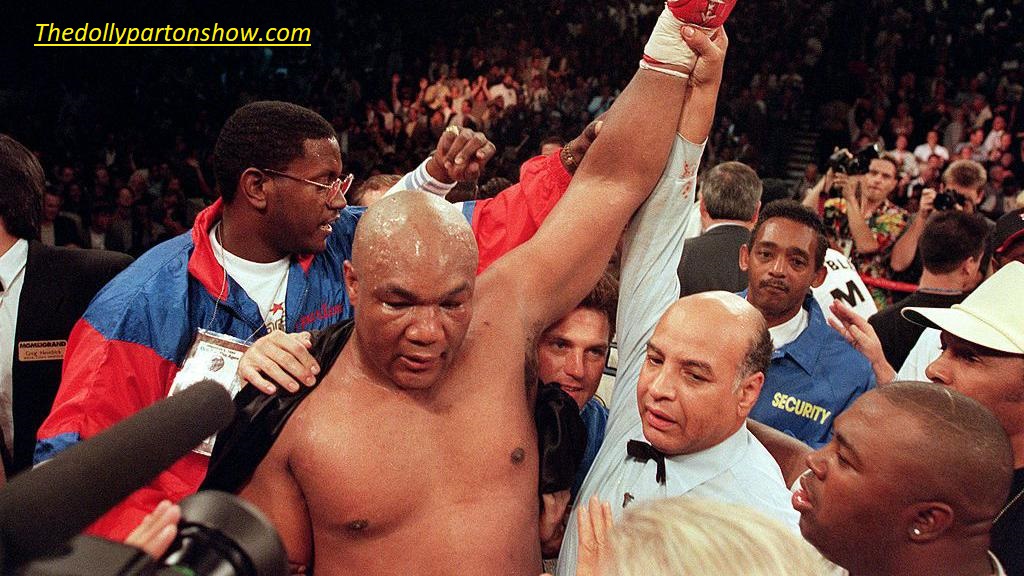
On October 30, 1974, George Foreman faced Muhammad Ali in Kinshasa, Zaire (now the Democratic Republic of Congo), in what would become the most famous boxing match in history.
The Build-Up:
- Promoter Don King arranged the fight, guaranteeing each fighter $5 million (about $30 million today)
- The fight was scheduled for September but postponed when Foreman suffered a cut during training
- Ali was a 4-to-1 underdog
- Most experts predicted Foreman would knock Ali out easily
- Ali employed brilliant psychological warfare, calling Foreman “The Mummy” and saying he had “no rhythm, no footwork, no class”
The Fight Strategy:
Muhammad Ali invented his famous “rope-a-dope” strategy specifically for this fight:
- Ali leaned against the ropes, protecting his head
- Let Foreman punch himself to exhaustion
- The Zaire crowd chanted “Ali, bomaye!” (“Ali, kill him!”)
- Foreman threw hundreds of powerful punches, but most hit Ali’s arms and gloves
- By the eighth round, Foreman was exhausted
The Knockout:
In the eighth round:
- Ali saw Foreman was tired
- Unleashed a combination ending with a right hand
- Foreman fell to the canvas
- Couldn’t beat the count
- Muhammad Ali regained the heavyweight championship
The Aftermath:
- Foreman earned his guaranteed $5 million purse
- But the loss devastated him psychologically
- He struggled to understand how he lost
- The defeat began a downward spiral
Losses and First Retirement
After losing to Ali, Foreman’s career trajectory changed:
Foreman vs. Jimmy Young (March 17, 1977):
In Puerto Rico, Foreman fought journeyman Jimmy Young:
- Foreman was expected to win easily
- Instead, Young outboxed him for 12 rounds
- Foreman lost a unanimous decision
- Purse: Approximately $300,000
The Near-Death Experience:
After the Jimmy Young fight, something extraordinary happened in Foreman’s dressing room:
- George became severely dehydrated
- Felt like he was dying
- Experienced what he described as a religious epiphany
- Believed he heard God’s voice
- Emerged convinced he needed to change his life
Retirement and Ministry:
Following this experience:
- Foreman retired from boxing in 1977 at age 28
- Became an ordained Christian minister
- Founded the Church of the Lord Jesus Christ in Houston
- Lived off his boxing earnings while ministering
- Gained considerable weight, ballooning to over 300 pounds
- Spent 10 years away from the ring
Most people assumed George Foreman’s boxing career was over forever.
Becoming the Oldest Heavyweight Champion (1994)
On November 5, 1994, George Foreman achieved the impossible.
Foreman vs. Michael Moorer:
At 45 years old, Foreman challenged 26-year-old Michael Moorer for the heavyweight championship:
The Fight:
- Held at the MGM Grand in Las Vegas
- Moorer was heavily favored
- For nine rounds, Moorer outboxed the aging Foreman
- Moorer was ahead on all three judges’ scorecards
- Foreman seemed to be losing badly
The Miracle Knockout:
In the tenth round:
- Foreman landed a perfect right hand to Moorer’s chin
- Moorer collapsed to the canvas
- Referee counted him out
- George Foreman became heavyweight champion—20 years after first winning the title
Record Broken:
At 45 years and 299 days old, Foreman became the oldest heavyweight champion in boxing history, a record that still stands in 2026. The victory made international headlines and inspired millions.
Purse: Foreman earned approximately $10 million for the Moorer fight.
Final Fights and Retirement
Title Reign:
After defeating Moorer:
- Foreman was stripped of the WBA title for not fighting their mandatory challenger
- Held the IBF title until 1995
- Relinquished the title rather than fight
- Continued boxing in non-title fights
Final Fight (November 22, 1997):
Foreman’s last professional fight was against Shannon Briggs:
- Foreman was 48 years old
- Lost a close majority decision
- Earned approximately $5 million
- Retired permanently after this fight
Career Statistics:
- Total fights: 81
- Wins: 76 (68 by knockout)
- Losses: 5
- Knockout percentage: 89.5%
- Total career boxing earnings: Approximately $50-60 million
George Foreman Net Worth
As of February 2026, George Foreman’s net worth stands at an impressive $300 million, making him one of the wealthiest former athletes in the world. What’s remarkable is that George made the vast majority of this fortune not from boxing, but from business ventures—particularly the George Foreman Grill.
Boxing Earnings
Throughout his boxing career spanning 1969-1997, Foreman earned approximately $50-60 million from fight purses:
Major Fight Purses:
| Fight | Year | Opponent | Purse |
|---|---|---|---|
| Joe Frazier I | 1973 | Championship win | $375,000 |
| Joe Roman | 1973 | Title defense | $500,000 |
| Ken Norton | 1974 | Title defense | $750,000 |
| Muhammad Ali (“Rumble in the Jungle”) | 1974 | Title fight | $5 million |
| Jimmy Young | 1977 | Loss | $300,000 |
| Evander Holyfield | 1991 | Title challenge | $12.5 million |
| Michael Moorer | 1994 | Championship win | $10 million |
| Shannon Briggs | 1997 | Final fight | $5 million |
While these earnings were substantial, they pale in comparison to what Foreman made from the grill.
The George Foreman Grill: A $200 Million Knockout
The George Foreman Grill is one of the most successful product endorsements in history and the foundation of Foreman’s $300 million net worth.
The Beginning (1994):
Shortly after regaining the heavyweight championship, Foreman was approached by Salton, Inc., a small appliance company:
- They had developed a countertop grill
- Wanted Foreman to endorse it
- Offered him a choice: 40% ownership stake or $3 million upfront cash payment
- Foreman chose the ownership stake
This decision would become one of the smartest business moves by any athlete ever.
The Product:
The George Foreman Lean Mean Fat-Reducing Grilling Machine featured:
- Slanted design that drained fat into a tray
- Non-stick cooking surface
- Quick cooking time
- Easy cleanup
- Positioned as a healthy cooking alternative
Marketing Success:
The grill succeeded because:
- Foreman’s transformed image—from scary fighter to lovable grandfather—made him the perfect pitchman
- His warm, humorous commercials resonated with consumers
- The health angle appealed to 1990s fitness trends
- Competitive price point ($50-100) made it accessible
- Word-of-mouth from satisfied customers drove sales
Other Business Ventures and Income Streams
Endorsements and Sponsorships:
Beyond the grill, Foreman has endorsed numerous products:
- Meineke Car Care Centers (multi-year deal worth millions)
- Doritos (appeared in Super Bowl commercials)
- McDonald’s (promoting the Big George sandwich)
- KFC (various promotions)
- Casual Male retail clothing stores
- Various other products and services
Book Sales:
Foreman has authored multiple books:
- “By George: The Autobiography of George Foreman” (1995)
- “Knockout Entrepreneur” (1998)
- “God in My Corner: A Spiritual Memoir” (2007)
- “George Foreman’s Indoor Grilling Made Easy” (2004)
- Cookbooks featuring grill recipes
These books have sold hundreds of thousands of copies, generating substantial royalties.
Television Appearances:
Foreman has appeared on numerous TV shows and documentaries:
- Reality show “Family Foreman” (2008)
- Multiple boxing commentary gigs
- Talk show appearances
- Documentary features
- Commercial appearances (earning $50,000-200,000 per appearance)
Speaking Engagements:
As a motivational speaker, Foreman commands fees of:
- $50,000-100,000 per speaking engagement
- Speaks at corporate events, churches, conferences
- Shares his comeback story and business success
Net Worth Breakdown
George Foreman’s $300 million net worth comes from:
| Source | Estimated Earnings |
|---|---|
| Boxing Career | $50-60 million |
| George Foreman Grill (Buyout) | $200+ million |
| Ongoing Grill Royalties (1999-2026) | $100+ million |
| Other Endorsements | $30-40 million |
| Book Sales | $5-10 million |
| TV/Media Appearances | $10-15 million |
| Speaking Engagements | $5-8 million |
| Investments and Assets | Variable |
Comparison to Other Boxing Legends
How does Foreman’s net worth compare to other boxing greats?
| Boxer | Net Worth (2026) | Primary Wealth Source |
|---|---|---|
| George Foreman | $300 million | George Foreman Grill |
| Floyd Mayweather | $400-450 million | Boxing purses, promotional company |
| Manny Pacquiao | $220 million | Boxing, politics, endorsements |
| Oscar De La Hoya | $200 million | Boxing, Golden Boy Promotions |
| Sugar Ray Leonard | $120 million | Boxing, endorsements |
| Lennox Lewis | $140 million | Boxing, endorsements |
| Mike Tyson | $10 million | Boxing (lost fortune, rebuilding) |
| Evander Holyfield | $1 million | Boxing (lost fortune) |
Remarkably, despite earning far less in boxing than Floyd Mayweather, Foreman’s business acumen made him wealthier than most boxing legends. His net worth is second only to Mayweather among boxers.
Financial Philosophy
George credits his financial success to:
Smart Decisions:
- Choosing ownership stake over immediate cash (1994 grill deal)
- Living modestly despite wealth
- Avoiding the lavish lifestyle that bankrupted other athletes
- Investing in his community and family
Avoiding Common Pitfalls:
- Didn’t surround himself with yes-men
- Avoided excessive spending on cars, jewelry, mansions
- Maintained financial discipline
- Sought professional financial advice
Faith-Based Approach:
- Credits God for his success
- Believes in tithing and charitable giving
- Views wealth as a responsibility to help others
- Uses money to fund youth programs and ministry
Real Estate Holdings
Unlike many wealthy athletes, Foreman hasn’t made real estate a major focus:
Primary Residence:
- Lives in Houston, Texas area
- Modest home compared to his wealth
- Estimated value: $2-4 million
- Far less ostentatious than homes of other $300 million athletes
Other Properties:
- Owns the building housing his youth center
- Some commercial property in Houston
- Keeps real estate portfolio relatively simple
Foreman’s philosophy is “use your money, don’t let it use you,” which explains his relatively modest lifestyle despite enormous wealth.
Personal Life
Marriages and Family
George Foreman has been married five times and has 12 children, including five sons all named George.
Marriages:
- Adrienne Calhoun (1971-1974): Married during his first championship reign; ended in divorce
- Cynthia Lewis (1977-1979): Brief marriage during his early ministry years
- Sharon Goodson (1981-1982): Another short-lived marriage
- Andrea Skeete (1982-1985): Divorced before his boxing comeback
- Mary Joan Martelly (1985-present): His current wife of 41 years as of 2026
Current Marriage:
Mary Joan Martelly has been George’s wife since March 27, 1985:
- Met her shortly before his comeback
- She supported his return to boxing
- Helped raise the children
- Involved in his youth center and charitable work
- Described by George as his “rock” and best friend
The George Family:
George famously named all five of his sons “George”:
- George Jr. – Entrepreneur and boxing trainer
- George III – Known as “Monk,” also boxes and trains fighters
- George IV – Known as “Big Wheel,” businessman
- George V – Known as “Red,” entrepreneur
- George VI – Known as “Little Joey,” youngest son
Why All Named George:
Foreman explained he named all his sons George because:
- He wanted them to share his legacy
- Believed it would help them bond as brothers
- Saw it as a way to ensure his name continues
- Wanted them to always have something tying them together
Daughters:
George has seven daughters:
- Michi, Freeda (deceased 2019), Georgetta, Natalie, Leola, Isabella, and Courtney
FAQs
What is George Foreman Net worth in 2026?
George Foreman’s net worth is $300 million as of February 2026. He made approximately $50-60 million from his boxing career, but the vast majority of his wealth—over $200 million—came from the George Foreman Grill. He received $137.5 million when he sold his ownership stake in 1999 and continues earning royalties on grill sales, adding an estimated $5-8 million annually.
How much money did George Foreman make from the George Foreman Grill?
George Foreman made over $200 million from the George Foreman Grill. In 1999, he sold his 40% ownership stake in the grill to Salton, Inc. for $137.5 million cash. Additionally, he negotiated ongoing royalty payments of approximately 5% on all sales. With over 100 million grills sold since 1994, his total earnings from the grill exceed his entire boxing career earnings by more than three times.
How old was George Foreman when he became heavyweight champion the second time?
George Foreman was 45 years and 299 days old when he knocked out Michael Moorer to become heavyweight champion on November 5, 1994. This made him the oldest heavyweight champion in boxing history, a record that still stands in 2026. He had first won the title 20 years earlier in 1973 at age 24, making his comeback one of the most remarkable stories in sports history.
Why did George Foreman name all his sons George?
George Foreman named all five of his sons “George” to create a lasting family bond and legacy. He explained that he wanted his sons to share his name so they would always be connected to each other and to him. Each son goes by a different nickname (Monk, Big Wheel, Red, Little Joey) to distinguish them. Foreman saw it as a way to ensure family unity and pass on his legacy to the next generation.
Is George Foreman richer than other boxing legends?
Yes, George Foreman’s $300 million net worth makes him one of the wealthiest boxers in history. Only Floyd Mayweather ($400-450 million) has a higher net worth among boxers. Foreman is significantly wealthier than Manny Pacquiao ($220 million), Oscar De La Hoya ($200 million), and Sugar Ray Leonard ($120 million). Tragically, boxers who earned similar purses like Mike Tyson and Evander Holyfield lost most of their fortunes, while Foreman’s business acumen multiplied his wealth.
Conclusion
George Foreman’s journey from the Fifth Ward of Houston to a $300 million fortune is one of the most inspiring success stories in sports and business history. He proved that champions are made not just in the ring, but in how they handle life after the final bell.
What makes Foreman’s story unique is that he achieved his greatest success after most people thought his career was over. When he returned to boxing at age 38, critics mocked him. When he became champion at 45, he shocked the world. And when he put his name on a simple countertop grill, he built wealth that dwarfed his boxing earnings.
The George Foreman Grill wasn’t just a product—it was proof that reinvention is possible at any age. Foreman transformed from the scary fighter who destroyed Joe Frazier into the lovable grandfather who sold 100 million grills. His warm personality, self-deprecating humor, and genuine authenticity made him one of advertising’s most effective pitchmen.
But beyond the money and the championships, George Foreman’s real legacy is his commitment to giving back. The George Foreman Youth and Community Center in Houston has helped thousands of kids escape the same poverty and violence that nearly destroyed young George. His ministry work, charitable donations, and mentorship demonstrate that true success is measured by impact, not income.
At 77 years old in 2026, George Foreman remains active, healthy, and committed to his family, faith, and community. His net worth of $300 million provides security for generations of Foremans, but more importantly, his story provides inspiration for anyone facing obstacles.
George Foreman proved you can make a comeback at any age, that business success can exceed athletic achievement, and that staying true to your values matters more than championships or cash. He knocked out opponents, poverty, and age itself. And in doing so, Big George became not just a boxing legend, but an American icon.